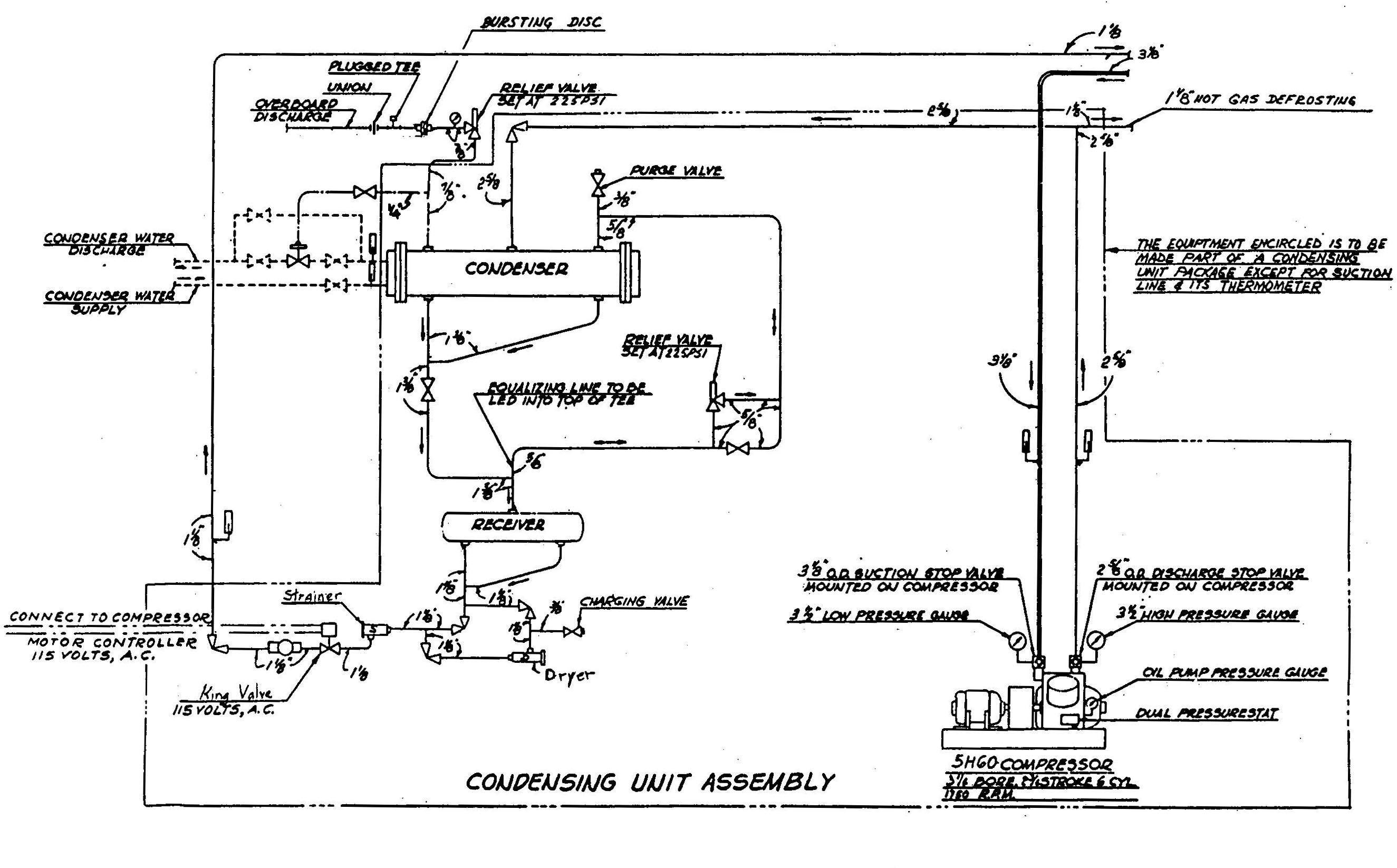
Ammonia Piping Installation Details
Hi Andy,yup, your approach is industry standard. But, unless my memory fails me, the pressure codes are quite explicit on this, and A333 is the preferred way to go for low temp. In Australia most contractors use Sched 80 A106 or A53 for low temp as a rule, but I have never heard of anyone actually complying with the code and doing the ductility tests that are formally required.
You can get away with it, I am sure, but in this day and age of 'duty of care', what would a jury say in the event of an accident that may have been the result of taking a shortcut in material selection? In my position as consultant, I make the client well aware of the implications of using lower grade steels for low temp (generally they accept the risk and go for A106, I should add).In a way this industry approach is self fulfilling or catch 22: No one uses A333, so it is hard to come by and expensive. Therefore no one uses A333.But I agree fully with your comments re stainless steel, especially with regard to CO2 installations.cheersMichael. Hi guys:In Alaska, many of us are using stainless. IIAR has approvals for it in the piping handbook to -200 I think, and the inspectors are willing to let us 'hang our hat' on IIAR for compliance. Costwise, its about the same as the welding labor (high locally) cancels out the added cost. 2' and over is schedule 10, so tig 2 pass for virtually everything cuts way down on weld labor, and the long term savings in painting are good as well.
Pixrecovery keygen mac. Also, being schedule 10, interior volume of like size pipe is increased over iron 40, having a lot of side benefits if you are on edge of sizing or less restriction and less weight in pipe to buy and support on hangers. You can find a good specification on 'Ammonia Refrigeration Piping Handbook' from IIAR Chapter 2 page 2-1 and 2-2.The code point out 'the impact test is not required for temperature beetween -20F and -150F provided the maximun circunferencial or longitudinal tensile stress resulting from coincident pressure, thermal contraction or bending beetween support does not exceed 40% of th e allowable stress for the material'So as the pressure for ammonia is very low and you disign the piping very freely you can use A53GrB,A105 or API 5L.;).
For PCE (pressure containing equipment or pressure vessels) the ASME Section VIII code section you are referring to is UCS-66 and deals with the coincidence pressure cases. There is a like section in the ANSI piping codes.Some companies do not allow the use of the stress deration and require the use of charpy impacted materials or low temp alloys. Many places will simply use stainless steel since it is more easily attained and you only have to maintain one low temperature welding standard and qualification records.For low temp you can use SA53 grade B or SA106 pipe with Charpy test or use A333 gr 1 pipe without Charpy test.Ken.
Hi Andy,yup, your approach is industry standard. But, unless my memory fails me, the pressure codes are quite explicit on this, and A333 is the preferred way to go for low temp. In Australia most contractors use Sched 80 A106 or A53 for low temp as a rule, but I have never heard of anyone actually complying with the code and doing the ductility tests that are formally required.
You can get away with it, I am sure, but in this day and age of 'duty of care', what would a jury say in the event of an accident that may have been the result of taking a shortcut in material selection? In my position as consultant, I make the client well aware of the implications of using lower grade steels for low temp (generally they accept the risk and go for A106, I should add).In a way this industry approach is self fulfilling or catch 22: No one uses A333, so it is hard to come by and expensive. Therefore no one uses A333.But I agree fully with your comments re stainless steel, especially with regard to CO2 installations.cheersMichael. Hi guys:In Alaska, many of us are using stainless. IIAR has approvals for it in the piping handbook to -200 I think, and the inspectors are willing to let us 'hang our hat' on IIAR for compliance. Costwise, its about the same as the welding labor (high locally) cancels out the added cost.
Ammonia Piping Installation Details Form
2' and over is schedule 10, so tig 2 pass for virtually everything cuts way down on weld labor, and the long term savings in painting are good as well. Also, being schedule 10, interior volume of like size pipe is increased over iron 40, having a lot of side benefits if you are on edge of sizing or less restriction and less weight in pipe to buy and support on hangers. You can find a good specification on 'Ammonia Refrigeration Piping Handbook' from IIAR Chapter 2 page 2-1 and 2-2.The code point out 'the impact test is not required for temperature beetween -20F and -150F provided the maximun circunferencial or longitudinal tensile stress resulting from coincident pressure, thermal contraction or bending beetween support does not exceed 40% of th e allowable stress for the material'So as the pressure for ammonia is very low and you disign the piping very freely you can use A53GrB,A105 or API 5L.;). For PCE (pressure containing equipment or pressure vessels) the ASME Section VIII code section you are referring to is UCS-66 and deals with the coincidence pressure cases. There is a like section in the ANSI piping codes.Some companies do not allow the use of the stress deration and require the use of charpy impacted materials or low temp alloys.

Many places will simply use stainless steel since it is more easily attained and you only have to maintain one low temperature welding standard and qualification records.For low temp you can use SA53 grade B or SA106 pipe with Charpy test or use A333 gr 1 pipe without Charpy test.Ken.
Comments are closed.